The field
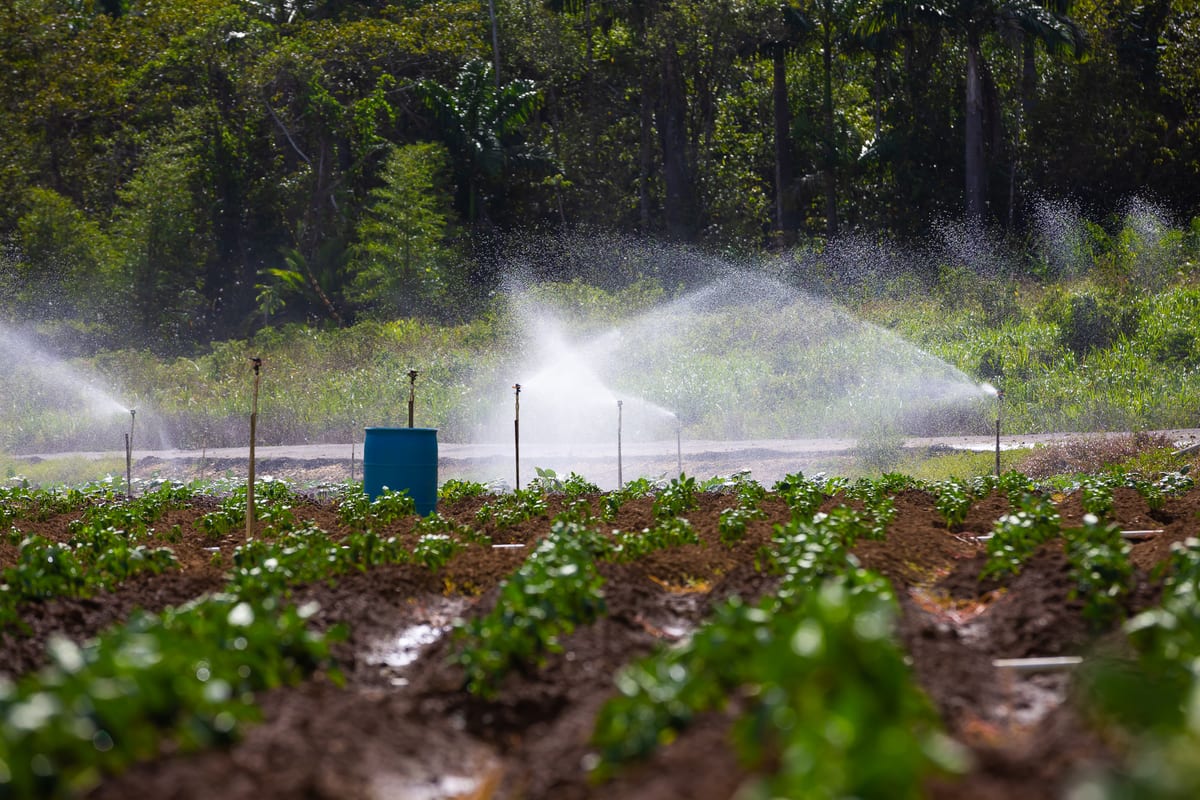
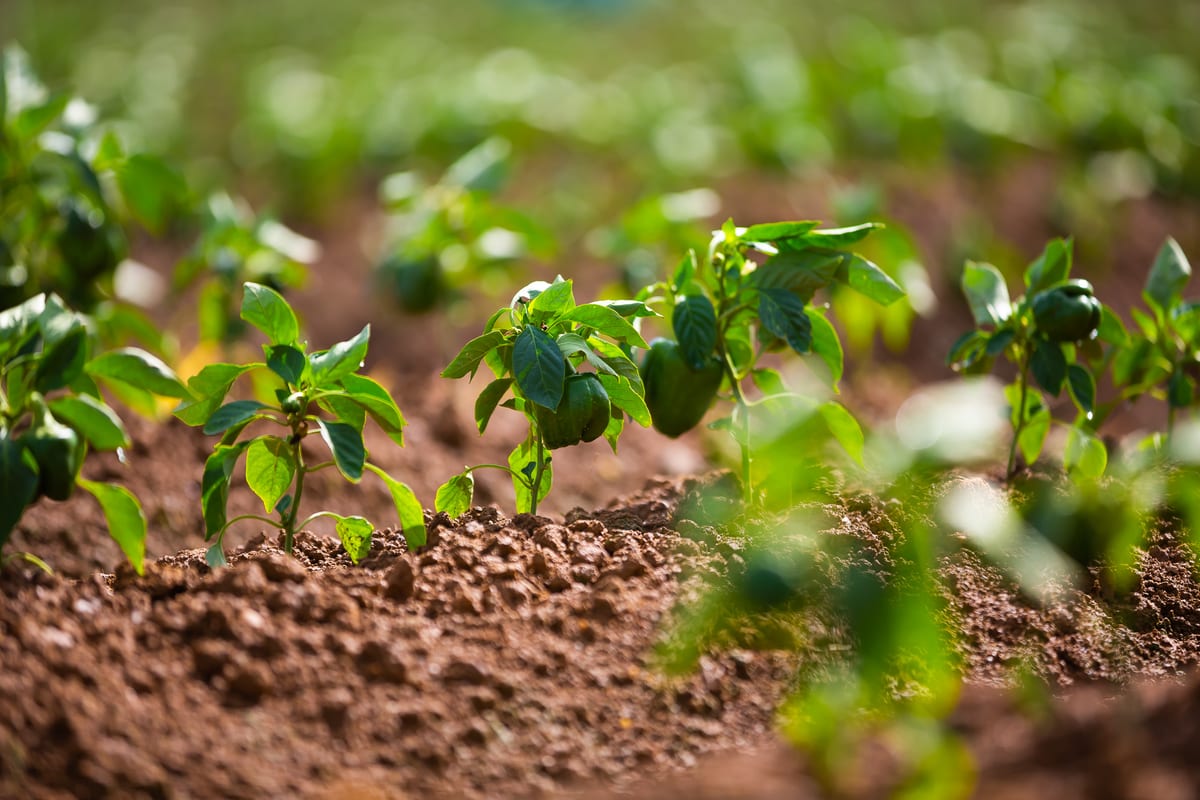
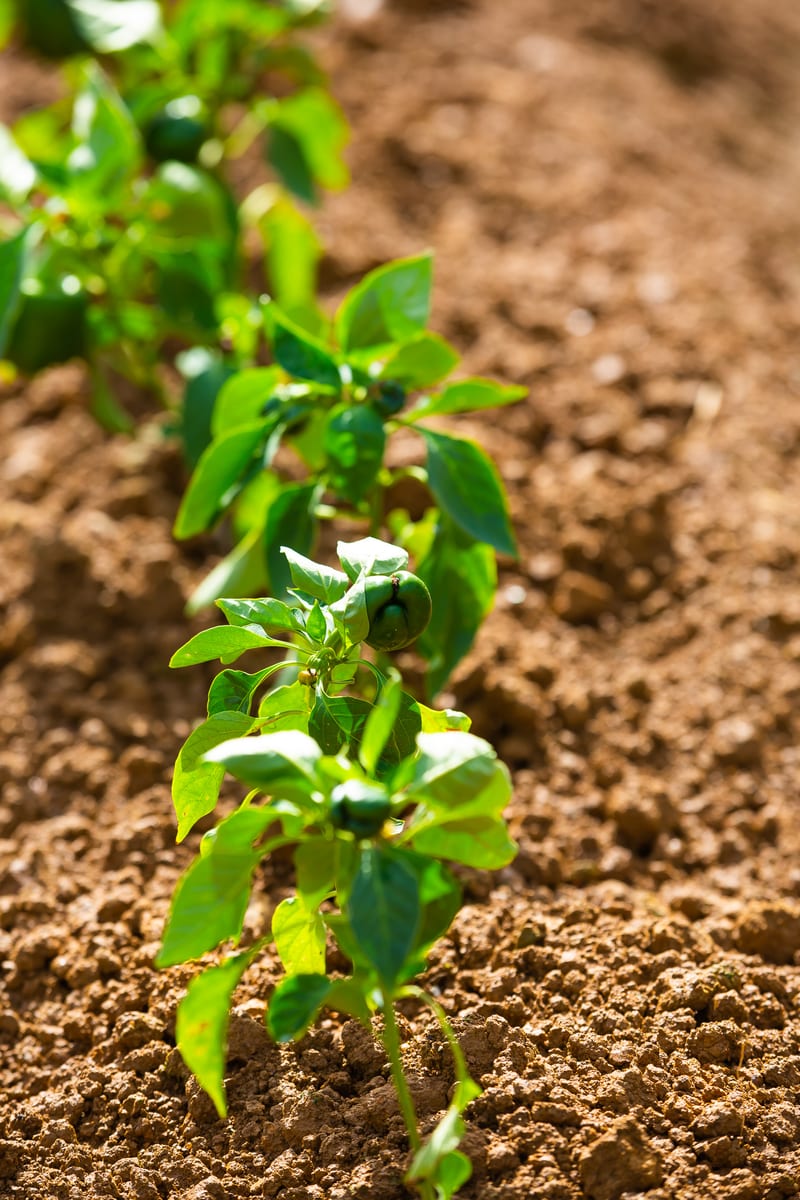
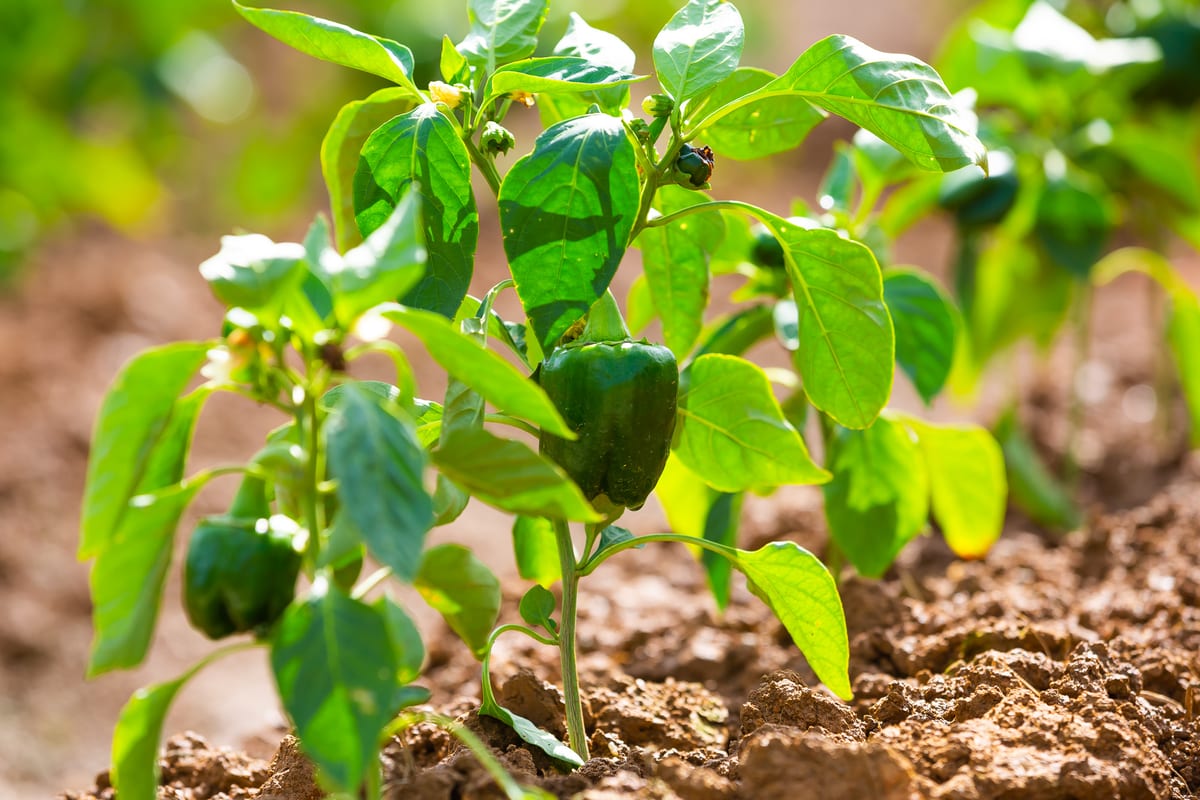
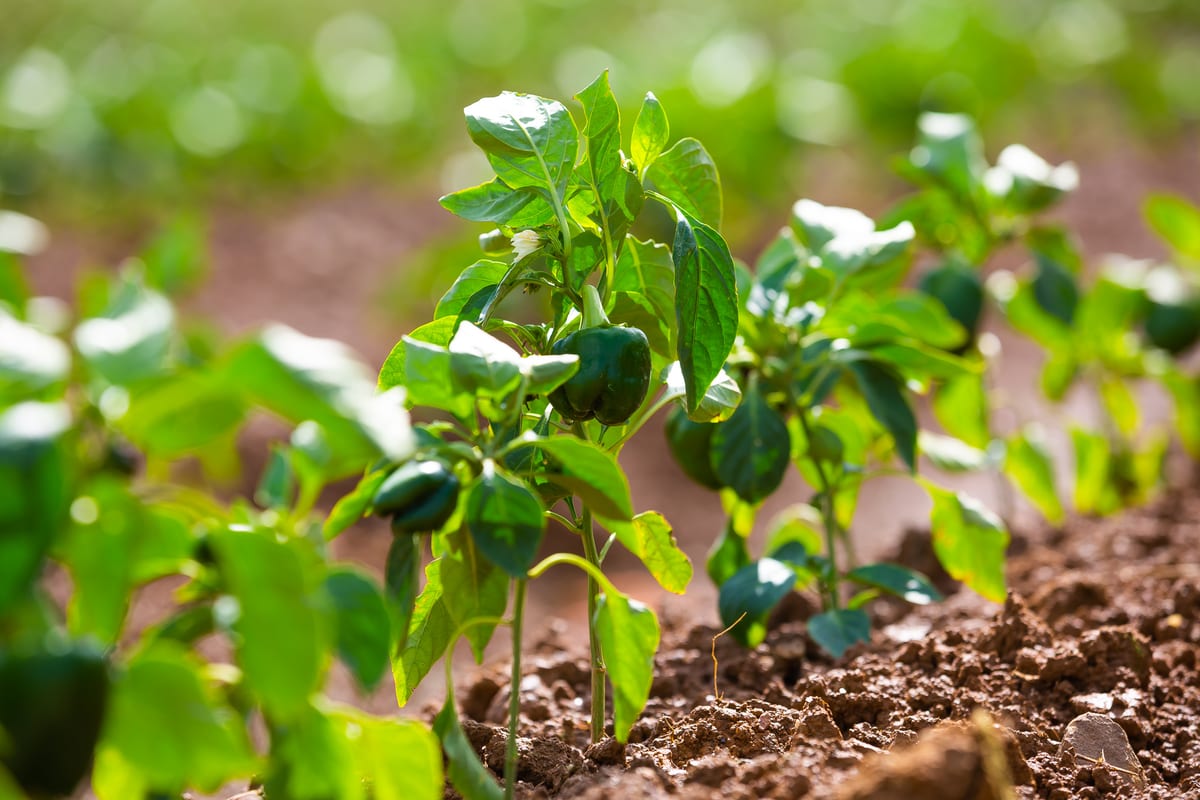
Hot peppers are raised from seed and set out into prepared beds as young plants. In this field on the 29th of March 2013 the beds were freshly worked, the soil loose and dark, and the plants still small enough that the ground between them showed.
A pepper plant grows into a compact, branching shrub. The first fruit appear green among glossy leaves and stay green for weeks before they begin to colour.
Water
The same field was under overhead sprinklers. Peppers need steady moisture while they flower and set fruit; too little and flowers drop, too much and roots suffer.
Sprinklers wet the whole surface, leaves included. Drip lines, a common alternative, put water at the root and lose less of it to the air.
Not photographed
Between the field and the kitchen
The archive has no photographs of pepper picking, packing or selling, so this part of the chain is described rather than shown. It is also where much of the value is lost.
Hot peppers are picked by hand, ideally with the stem left on, and they bruise and soften quickly in heat. Every step after picking, from the bucket to the crate, the truck and the market stall, takes away a share of what was harvested. The losses compound: a small percentage at each step becomes a large one by the end.
The model below lets you see that effect on a hypothetical batch. Change the losses at each step, or improve handling, and watch how much reaches the buyer.
Not photographed
The produce
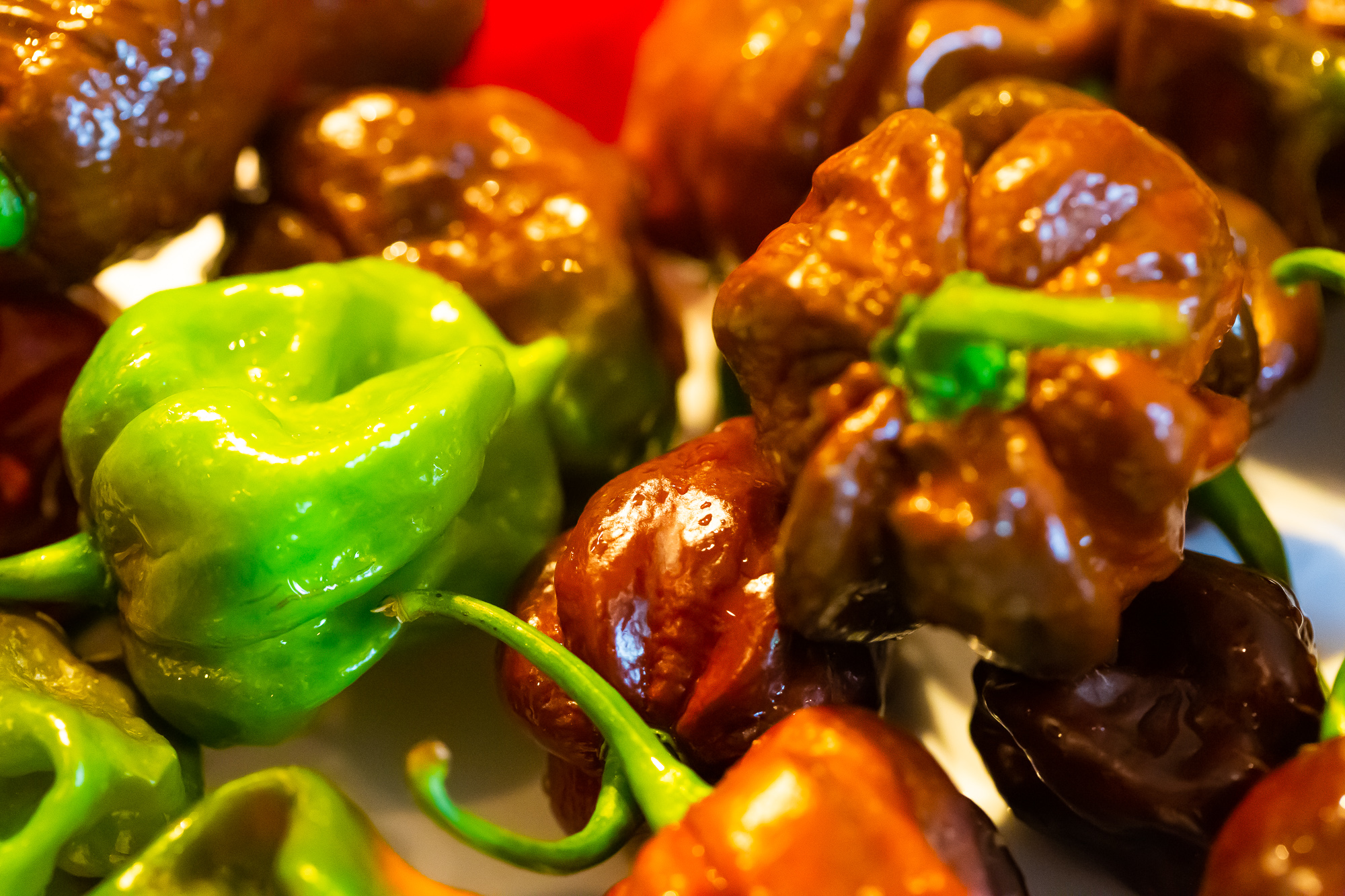
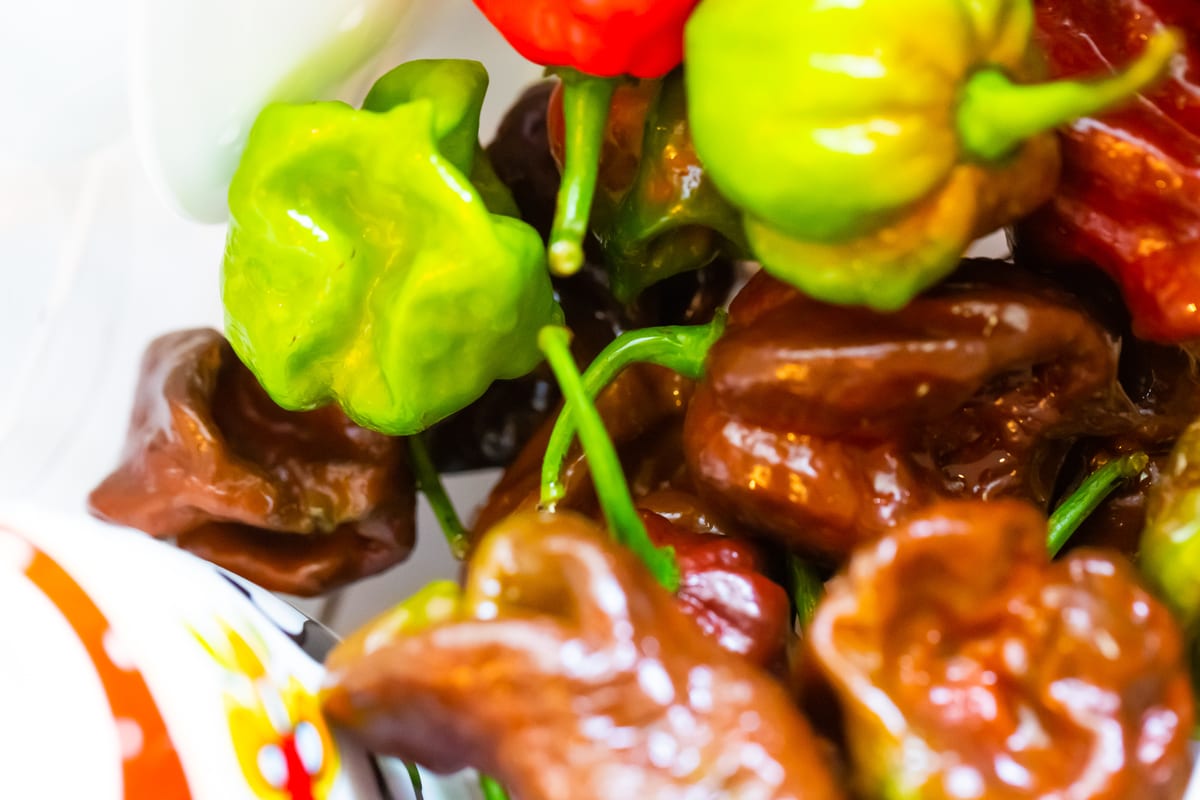
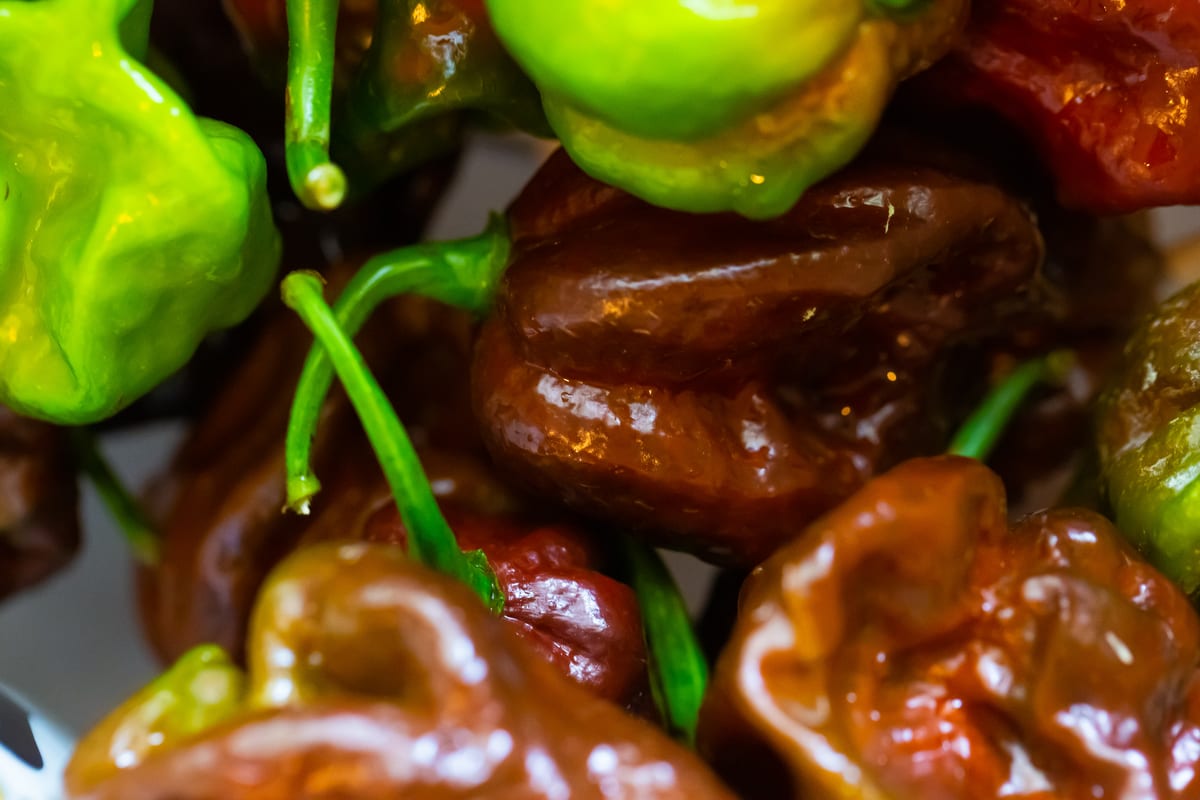
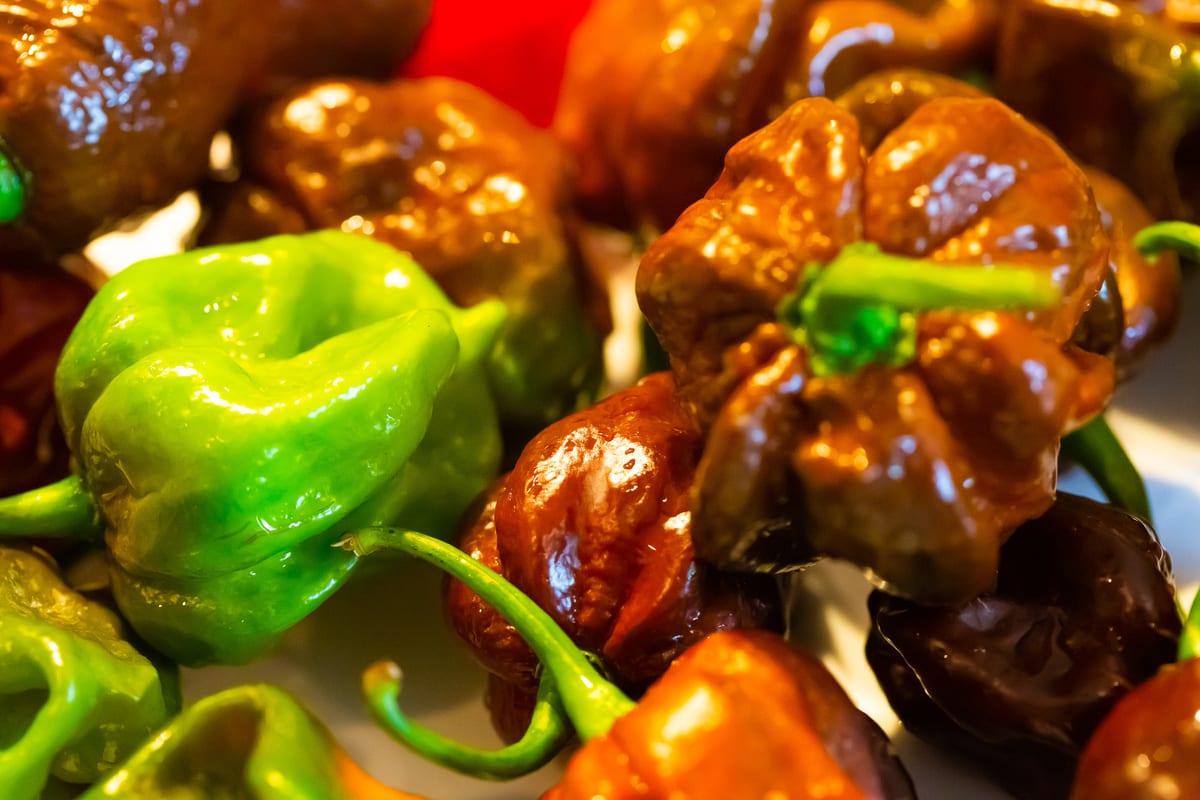
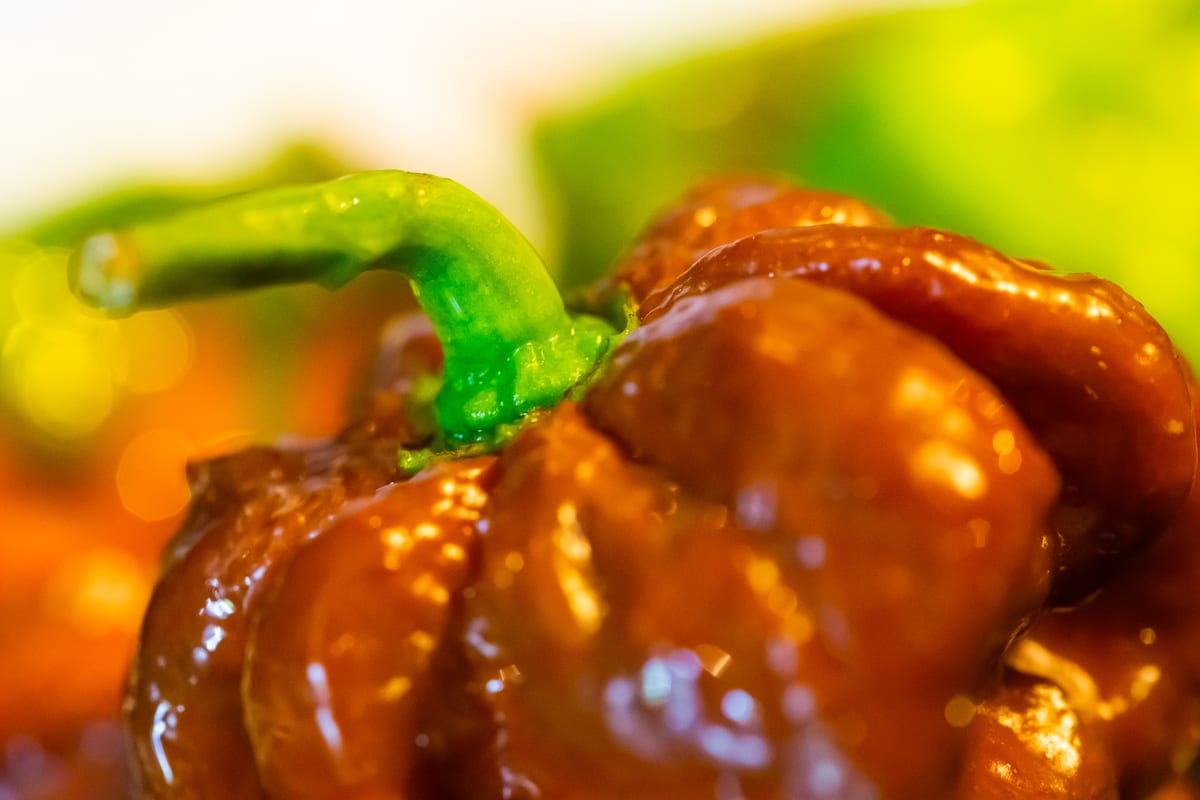
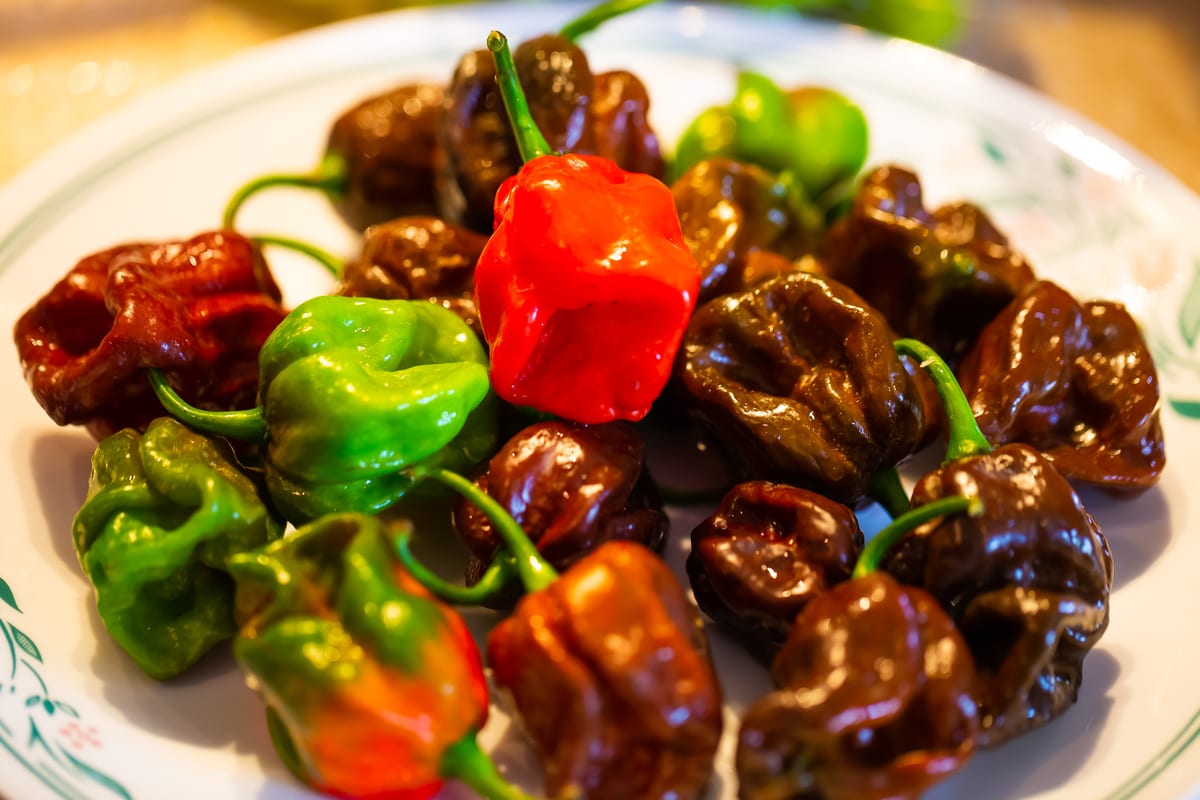
Out of the field, the colour range becomes obvious. Green fruit are immature; red, yellow and the dark brown "chocolate" types are ripe. The flavour and heat shift as they ripen.
The palette below is sampled from these photographs in your browser. It shows the colour spread of this one set of peppers, not a measurement standard.
Not photographed
In the kitchen
In most kitchens the pepper starts in a seasoning: hot pepper with onion and chadon beni, the long serrated herb that gives local green seasoning its smell.
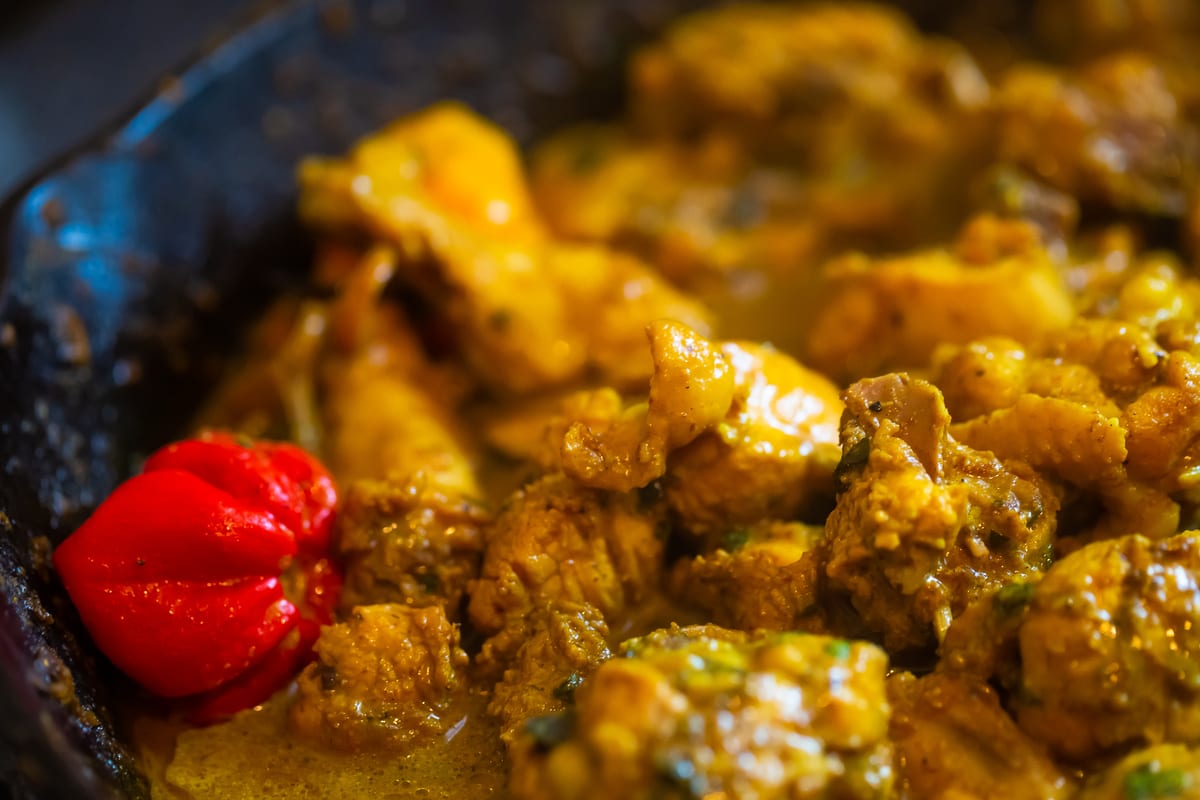
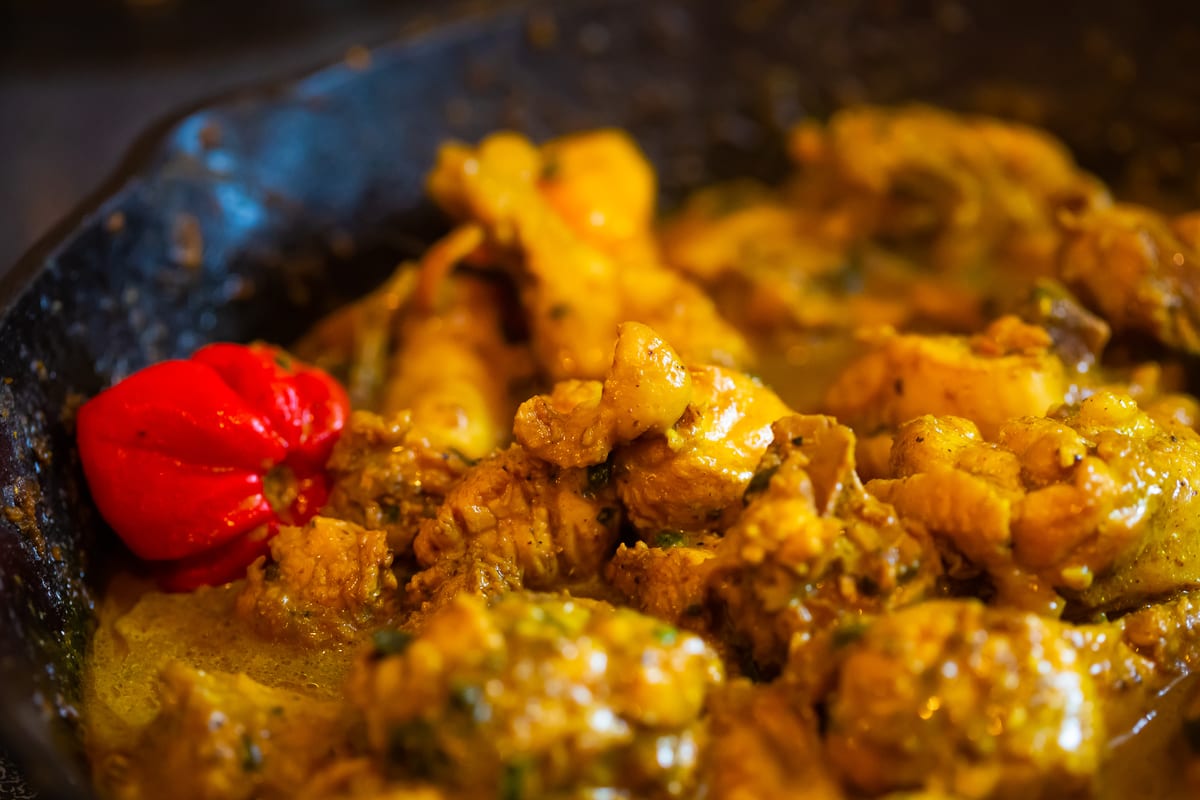
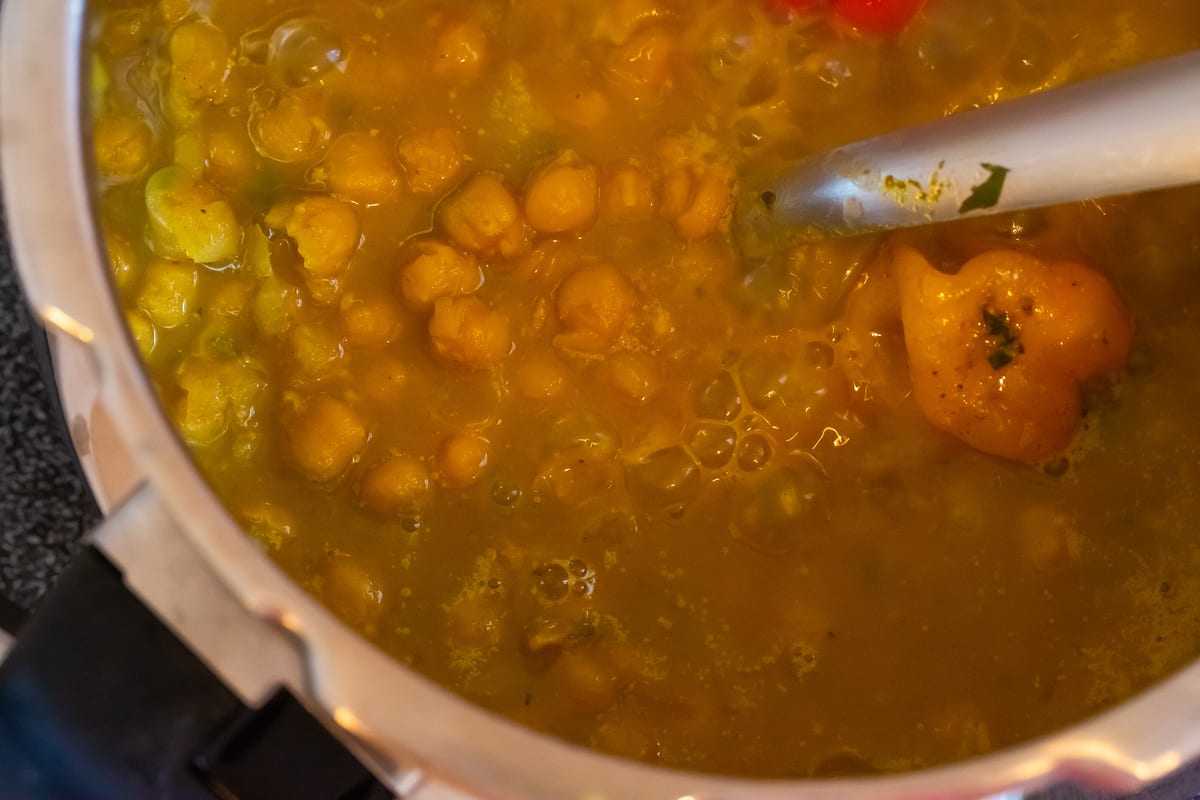
Cooks often drop a pepper into the pot whole, so it gives flavour and a little heat. If it bursts, the whole dish turns much hotter.
At the table
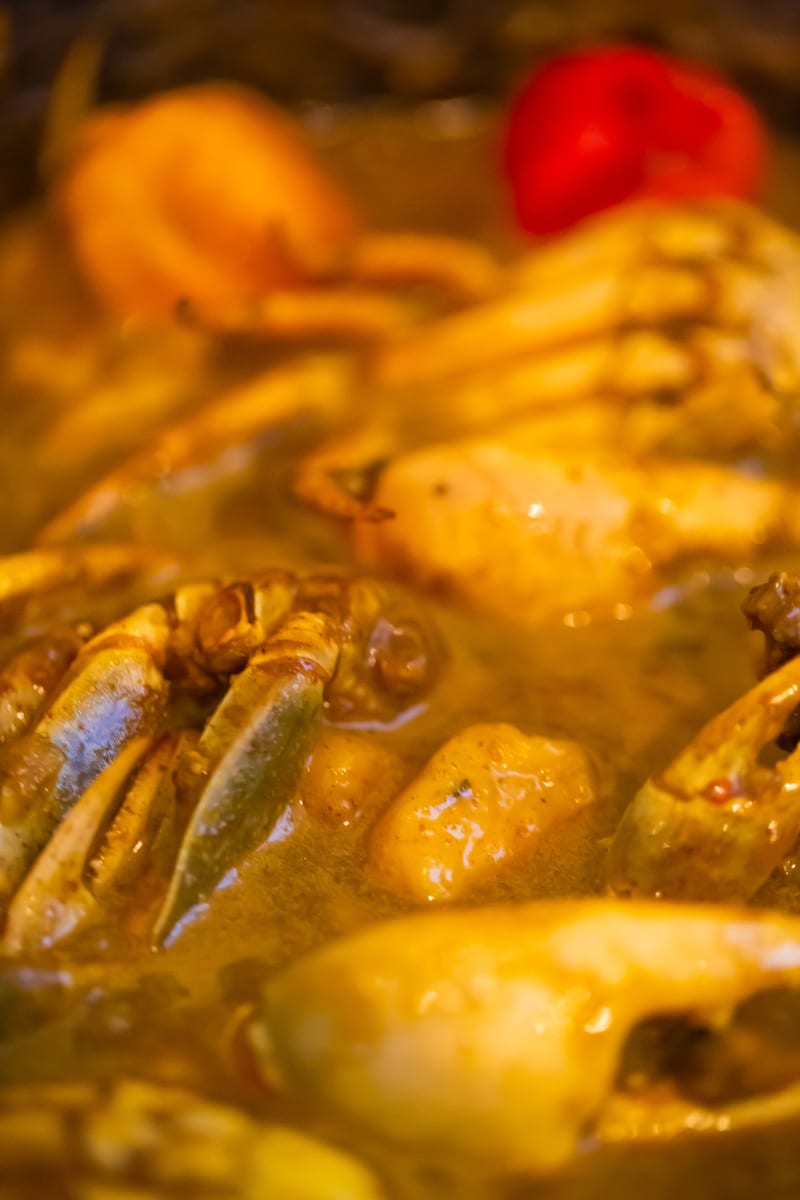
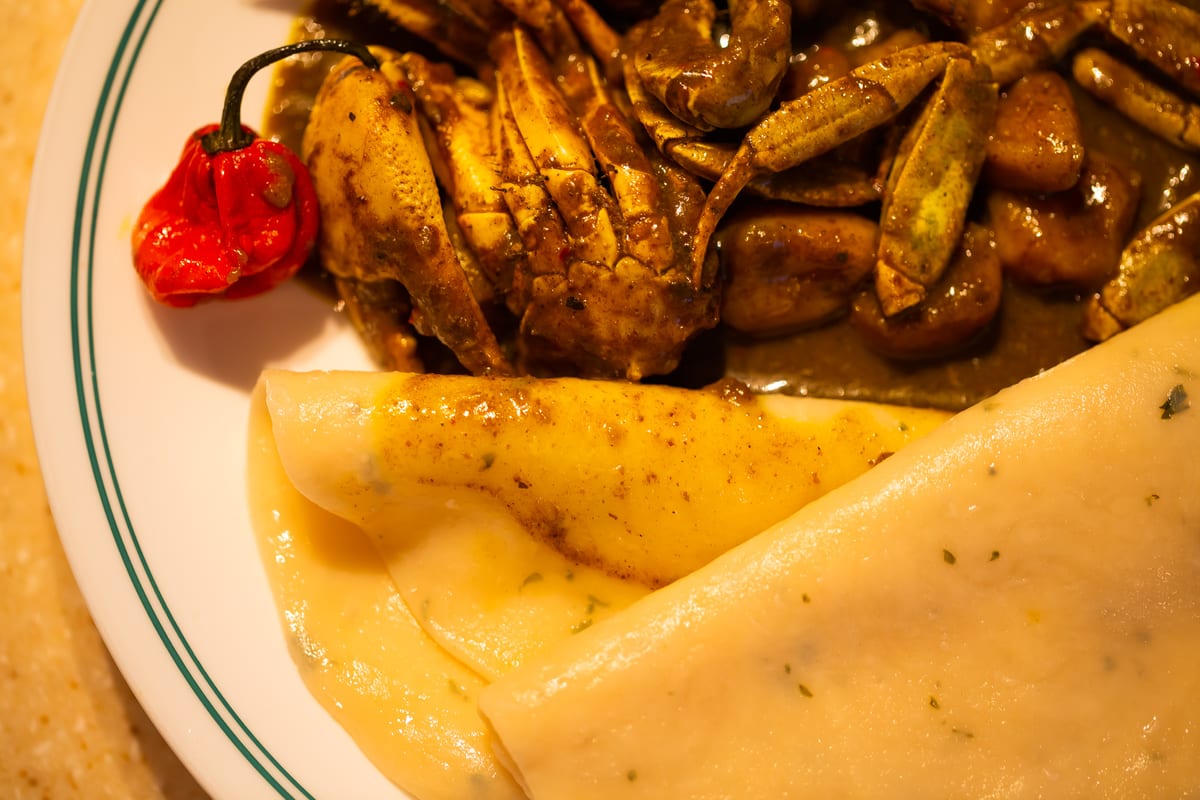
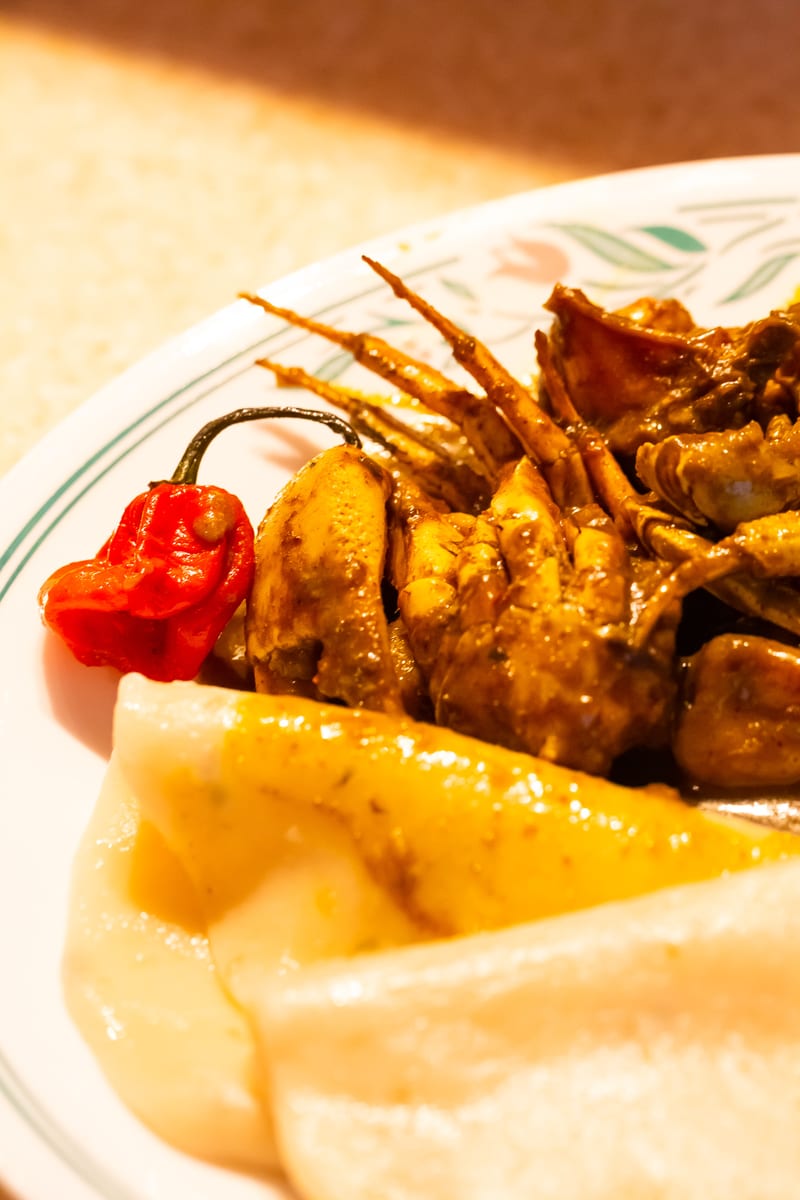
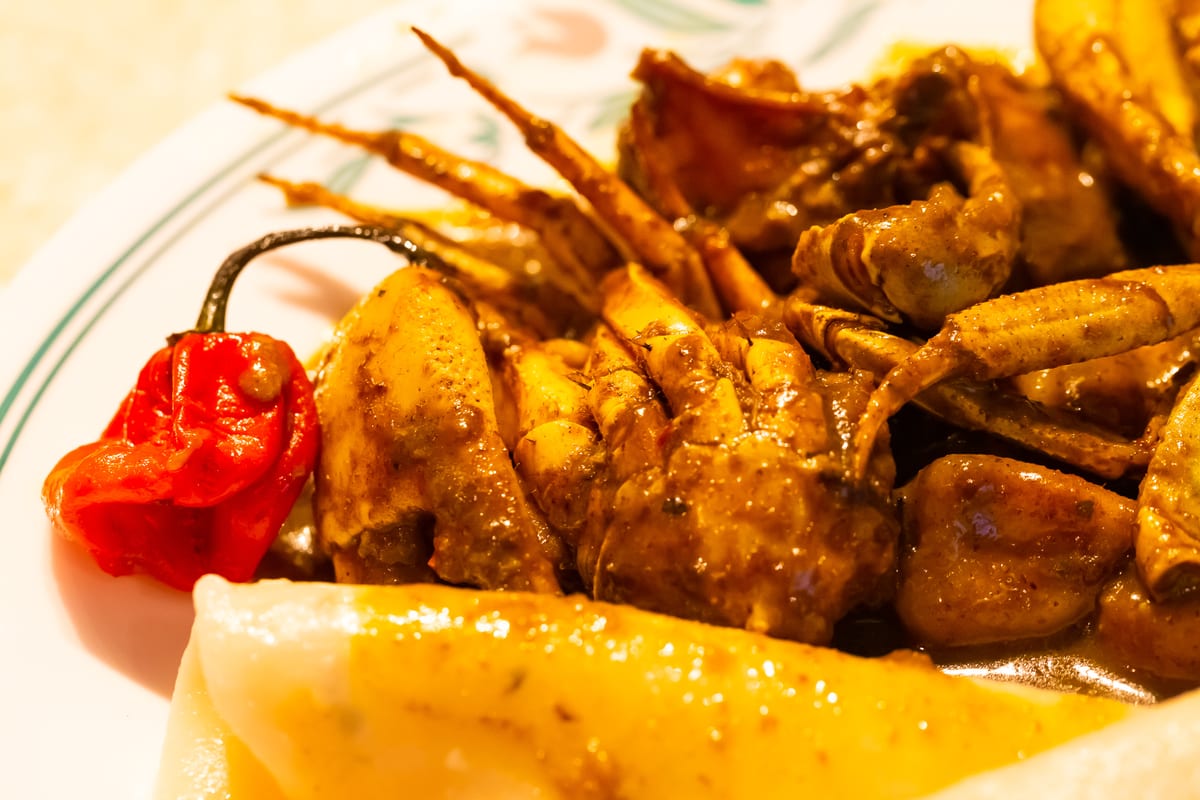
Curry crab and dumpling is the dish most associated with Tobago, and hot pepper is part of it from the pot to the plate.
More photographs